
✨ “My Father’s House: The Day Jesus Cast Merchants Out Of The Temple” ✨
Meta Description:
A child‑friendly retelling of Jesus casting merchants out of the Temple. Includes geography of Jerusalem, historical and archaeological evidence of Temple commerce, and biblical truth from Matthew 21:12–13, Mark 11:15–16, and Luke 19:45–46. Perfect for teaching children ages 3+ about reverence for God’s house.
Free Bible Images
📕Bible Verses: Jesus Cast Merchants Out Of The Temple
Mar 11:15
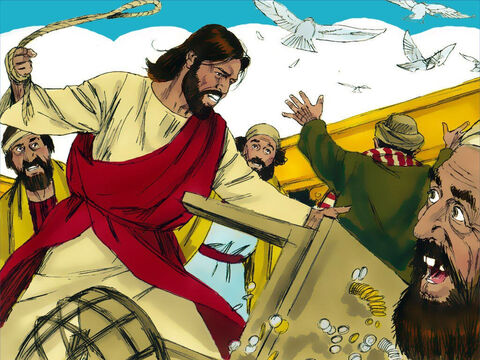
And they come to Jerusalem: and Jesus went into the temple, and began to cast out them that sold and bought in the temple, and overthrew the tables of the moneychangers, and the seats of them that sold doves;
Mar 11:16
And would not suffer that any man should carry any vessel through the temple.
Mar 11:17
And he taught, saying unto them, Is it not written, My house shall be called of all nations the house of prayer? but ye have made it a den of thieves.
👉Introduction: Jesus Cast Merchants Out of the Temple
Let Me tell you a story from when I walked on the earth—when My feet touched the warm stones of Jerusalem, and My eyes saw the great Temple shining in the sun.
The Temple sits on high on a hill called the Temple Mount. From its courts or yards, you could see the Kidron Valley below and the Mount of Olives across the way. Pilgrims climbed steep stone steps to reach the Temple gates.
Thousands of people came to the temple during the festivals. There were so many that the Temple courts felt like a giant marketplace. And that is where our story begins.
🏛️ The Temple Courts: A Place of Prayer… or a Marketplace?
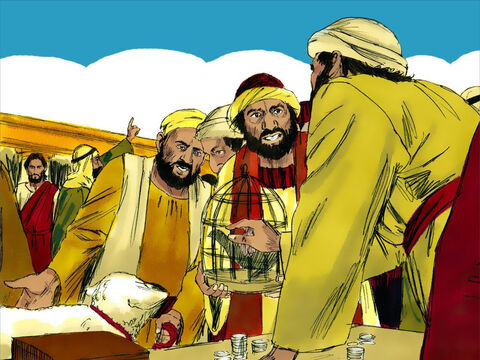
The Temple had large open yard called courts. The courts were the only place where Jewish people could pray. But instead of quiet prayers, the air was filled with the bleating of sheep, the cooing of doves, and the clinking of coins.
Why were animals there?
Because the Law of Moses required sacrifices—sheep, cattle, and doves (Leviticus 1–7). Many travelers could not bring animals from far away, so merchants sold them in Jerusalem. Buying and selling were allowed outside the Temple, but not inside its sacred courts.
The priests had permitted sellers to set up stalls inside the Temple courts.
Why were the money changers inside the temple courts? They exchanged Roman coins for Tyrian shekels. The Tyrian Shekel was the only currency accepted for the Temple tax because of its high silver purity.
Archaeologists and historians confirm that money changers and sellers operated in the Temple courts during My time. Josephus wrote about the huge crowds and the bustling commerce during festivals.
But something had gone terribly wrong…
🕊️ Jesus Speaks: “Children, Let Me Tell You What I Saw”
I walked into the Temple courts.
I heard shouting.
I smelled animals.
I saw people arguing over prices.
The place meant for prayer had become a noisy market.
I felt a deep sadness. Why had My Father’s house become a place of greed?
I asked Myself, How can people pray with all this noise? How can the poor worship when they are being cheated?
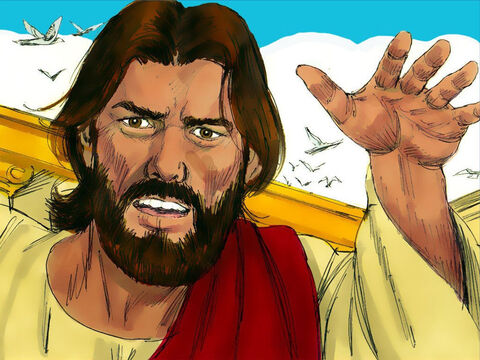
Then My sadness turned to righteous anger.
🔥 I Cast The Merchants Out Of The Temple
I took cords and made a small whip—not to hurt people, but to drive out the animals.
I overturned the tables of the money changers. Coins scattered across the stone floor like raindrops in a storm.
I said with a loud voice:
“My house shall be called a house of prayer,
but you have made it a den of robbers!”
—Matthew 21:13
Children, imagine a library where everyone is shouting.
Imagine someone scribbling on your favorite book.
Would you feel upset?
That is how I felt when I saw My Father’s house misused.

📜 Did Moses Allow Buying and Selling in the Temple?
Moses commanded sacrifices, but he never permitted buying and selling inside the Temple.
The Temple was to be holy—a place of prayer, not profit.
Selling animals was allowed in the city, not in the sacred courts.
The corruption came when priests allowed merchants to move their business into God’s holy space.
🏺 Archaeological Evidence of Temple Commerce
Archaeology and ancient writings confirm:
- Money changers operated in the Temple courts.
- Tyrian shekels were required for the Temple tax.
- Massive crowds during festivals created heavy commercial activity.
- Herod’s expanded courts made space where merchants set up stalls.
These findings match exactly what the Gospels describe.
💲💳Historical Evidence of Buying And Selling In The Temple
Josephus also told us that the high‑priestly families, who were supposed to help the people, became greedy. He said, “They were guilty of… violence… and of plundering the common people.” (Antiquities 20.8.8). This means they took advantage of the people by controlling the sale of animals, the exchange of money, and even charged unfair prices. Some people who tried to resist were beaten.
Josephus also described how many animals were sacrificed during Passover. He wrote that there were “Two hundred and fifty‑six thousand five hundred sacrifices.” (War 6.9.3). That is a huge number, and it shows how much business was happening around the Temple.
All of this helps us understand why Jesus was upset when He saw the Temple being used like a busy market instead of a holy, quiet place to pray.
🌟 Application for Children: What Does This Mean for Us?
Children, My message is simple:
- God’s house is special.
- God dedicated it as a place to pray to God and to worship.
- Worship should be sincere.
- The place of worship should be treated with reverence.
- We must not let greed or noise push out prayer.
- Our hearts are also like temples—keep them clean and free from sin,
❓ FAQ: The Day Jesus Cast Merchants Out Of The Temple ✨
1. Why was Jesus angry?
Because the Temple was being used for business instead of prayer.
2. Were money changers necessary?
Yes, but not inside the Temple. They exchanged foreign coins for Tyrian shekels.
3. Did Jesus hurt anyone?
No. He drove out animals and overturned tables, but He did not harm people.
4. What does “den of robbers” mean?
It means people were cheating worshippers and misusing God’s house.
📗 Conclusion: Keep God’s House—and Your Heart—Holy
Children, I cleansed the Temple because I love My Father and I love you.
I want you to know that worship is precious.
Your heart is precious.
Keep it clean. Keep it full of kindness. Keep it full of prayer.
📣 Call to Action
If this story helped you, share it with another child, parent, or teacher.
Let’s help more little hearts learn to love God’s house and honor Him with pure worship.
📚 References
Archeobiblion. (n.d.). Money in the Temple of Jerusalem. https://archeobiblion.com
Bible Hub. (n.d.). Matthew 21:12 Study Bible. https://biblehub.com/matthew/21-12.htm
Bible Hub. (n.d.). John 2:14 Commentaries. https://biblehub.com/commentaries/john/2-14.htm (biblehub.com in Bing)
Bible Hub. (n.d.). Topical Bible: Men Selling Cattle, Sheep, and Doves. https://biblehub.com/topical/m/men_selling_cattle_sheep_and_doves.htm (biblehub.com in Bing)
Bible Hub. (n.d.). Historical evidence for Temple commerce. https://biblehub.com/library/matthew/21-12.htm (biblehub.com in Bing)
Israel Museum. (n.d.). Jerusalem and the Temple. https://museum.imj.org.il (museum.imj.org.il in Bing)
Ritmeyer, K. (1998). Secrets of Jerusalem’s Temple Mount. Biblical Archaeology Society.
Wikipedia. (n.d.). Temple Mount. https://en.wikipedia.org/wiki/Temple_Mount (en.wikipedia.org in Bing)
YouTube. (2025). Holy Monday for Kids – Jesus Clears the Temple. https://youtube.com


No comments:
Post a Comment